



Which 1099 Form Do I Need? (Quick Guide for Businesses)
Not sure whether to file a 1099-NEC, 1099-MISC, 1099-K, or something else? This short guide
IRS IRIS Record Limits: What You Need to Know About File Upload Capacity
The IRS has now officially increased the IRIS Taxpayer Portal CSV upload limit from 100
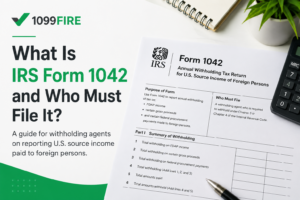
What Is IRS Form 1042 and Who Must File It?
IRS Form 1042, Annual Withholding Tax Return for U.S. Source Income of Foreign Persons, is

1099s for Landscaping and Snow Removal Services
Property owners, management companies, and businesses often hire independent contractors to maintain their grounds —

Noncash compensation on 1099-NEC: barter, credits, in-kind work
Noncash Compensation Overview Noncash or “in-kind” compensation includes anything of value given for services instead

1099s for U.S. territories payees (PR/VI/GU/AS/MP)
Puerto Rico (PR), U.S. Virgin Islands (VI), Guam (GU), American Samoa (AS), Northern Mariana Islands
1099-NEC vs. 1099-MISC: A decision tree by payment type
Getting the form right comes down to what you paid for. Use this step-by-step decision

NIL (Name/Image/Likeness) Deals: 1099 Rules
Core rule: Most NIL payments to student-athletes are business income to the athlete (independent contractor/sole

Babysitting & Lawn Care by Minors — Personal Payments
Core rule: If you’re paying personally for work at your home (babysitting, mowing, raking), you’re

IRS Matching of 1099s to Individual Returns
Every year, the IRS processes billions of information returns, including Forms 1099, W-2, and 1095.

1099 Reporting for Crowdfunding and Online Fundraising
Crowdfunding platforms like Kickstarter, GoFundMe, and Indiegogo have opened new doors for entrepreneurs, nonprofits, and

IRS 1099 Reporting for Influencers and Content Creators
And the influencer and content-creator economy continues to grow as more workers prioritize flexibility over

When Employers Must File Both 1095-B and 1095-C
Form 1095-B Overview Form 1095-B is used by insurance providers, including self-insured small employers, to

1099 Reporting for Lawsuit Settlements and Attorney Fees
When a lawsuit results in a settlement, the tax reporting obligations depend on the type

What Is Form 1099-CAP and When Must It Be Filed?
Form 1099-CAP, “Changes in Corporate Control and Capital Structure,” is an IRS information return. It

What IRS Letter 4800C Means
IRS Letter 4800C is a notice the IRS sends if they believe you underreported income

What if I Get Both a W-2 and a 1099 From the Same Employer?
Why You Might Receive Both Forms There are legitimate situations where the same business issues

What If You Forgot to File 1099s for Last Year?
If you didn’t issue 1099s for last year, don’t panic — but don’t ignore it
Will Congress Ever Raise the $600 1099-NEC Threshold?
Congress has already passed a law that will raise the $600 threshold for 1099-NEC, so
A Freelancer’s Nightmare: What Happens if You Don’t Get a 1099?
For many freelancers and independent contractors, tax season comes with one familiar form: the 1099-NEC.
Form 1099-PATR: What Farmers and Co-op Members Need to Know
If you’re a farmer or a member of an agricultural cooperative, chances are you’ll encounter
How to Handle Contractor Pushback on Providing W-9 Information
When you hire independent contractors, collecting a completed Form W-9 (Request for Taxpayer Identification Number
IRS 1099-K Threshold Reinstated
Form 1099-K is issued by third-party settlement organizations and payment processors (such as PayPal, Venmo,


IRS Confirms No Federal Form or Withholding Changes for 2025 Under One Big Beautiful Bill Act (OBBBA)
The IRS has announced that for the 2025 tax year, there will be no modifications
Outsourcing ACA & 1099 Filing vs. Software: Which Delivers the Most Relief?
When tax season hits, the real question isn’t “Can we file ACA or 1099s?”—it’s “What’s
How to Use IRS Bulk TIN Matching to Avoid Errors
One of the most common reasons businesses receive IRS “B” Notices or CP2100 Notices is
Understanding the IRS Combined Federal/State Filing Program
The IRS Combined Federal/State Filing (CF/SF) Program is designed to simplify information return reporting by
State-Specific 1099-K Thresholds: What Businesses Should Know
Form 1099-K is used by third-party settlement organizations (such as PayPal, Stripe, and Venmo) to
Hiring International Contractors? When to Use 1099 vs. 1042-S
Hiring international contractors requires following IRS reporting rules. Whether you issue Form 1099-NEC or Form
IRS Error: Name and SSN Must Match the Database
When filing Forms 1095-B or 1095-C with the IRS, one of the most common rejections
Countries With U.S. Income Tax Treaties for Form 1042-S Withholding Credits
The United States has income tax treaties with many countries that may allow nonresident aliens
IRS Announces the Retirement of the FIRE Site: How Our Company Will Assist You in a Seamless Transition to the New IRIS Site
In a significant development for tax professionals, the IRS has officially announced the retirement of

What is IRS IRIS?
IRS IRIS stands for the Information Returns Intake System, a new electronic filing platform developed
When the IRS Sends a CP2100 Notice
If you file information returns like Forms 1099 and the IRS finds incorrect taxpayer identification

Form 1095-C Coding Guide
Employers filing Form 1095-C must correctly report employee health coverage using Line 14 (Offer of
What to Do If You Missed Filing ACA Forms for a Prior Year – and How 1099FIRE Can Help
Failing to file Affordable Care Act (ACA) information returns—Forms 1095-B, 1095-C, and transmittals 1094-B/C—for a
1099 Reporting for Real Estate Transactions Beyond Form 1099-S
Form 1099-S is the IRS’s primary form for reporting proceeds from real estate transactions, such

1099 Requirements for Agricultural Businesses
Understanding the 1099 requirements for agricultural businesses is essential for farmers, ranchers, and agribusiness owners.

Handling 1099 Reporting for Prizes, Awards, and Promotional Giveaways
Businesses often use contests, awards, and promotional giveaways to attract customers and reward employees or
When Payments in Foreign Currency Require a 1099
U.S. businesses sometimes pay independent contractors, vendors, or professionals in a currency other than U.S.
1099 Considerations During Mergers & Acquisitions
Mergers and acquisitions (M&A) are complex transactions that involve not only strategic and financial decisions,

Estate Distributions & 1099 Reporting for Beneficiaries
When an estate distributes assets to beneficiaries, the executor or trustee may have to issue
What Types of Services Qualify for 1099‑NEC Reporting?
Understanding the services that require a 1099 is essential for business owners, contractors, and anyone

What happens if an employer cannot meet the filing deadline due to unforeseen circumstances?
If an employer cannot meet the filing deadline for ACA forms (Forms 1095-C and 1094-C)
Case Scenario for IRS Form 3921 (Exercise of an Incentive Stock Option)
Form 3921 is used to report the exercise of Incentive Stock Options (ISOs). When an
California 1023S CSV File Format for Form 592 Submissions
The California 1023S CSV file format is the standard layout required by the California Franchise
What steps should a recipient take if they believe the Form 1099‑NEC they received is incorrect?
If someone receives a Form 1099-NEC (Nonemployee Compensation) that they believe is incorrect, the IRS
The Difference Between Information Returns and Tax Returns
When it comes to filing with the IRS, not all forms are created equal. Two
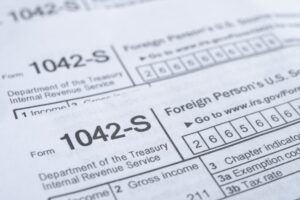
Why You Should Review Form 1042 Before Filing Form 1042-S
When it comes to withholding and reporting payments to foreign persons, many filers focus on
Understanding the Codes and Fields on IRS Form 1098-T
If you’re a student or the parent of a student, you’ve likely received IRS Form