


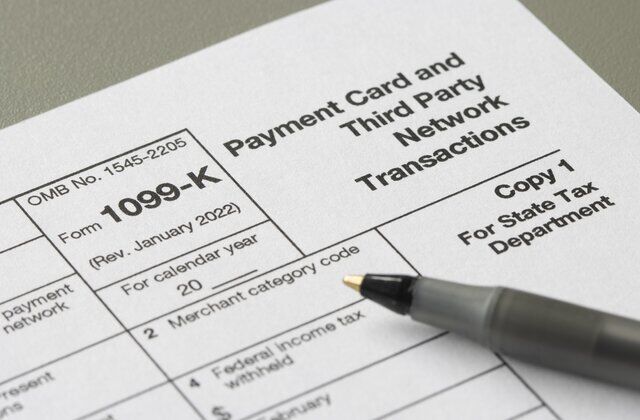
With the rise of the gig economy and digital payments, more freelancers and small businesses are receiving IRS Form 1099-K, Payment Card and Third Party Network Transactions. This form plays a key role in reporting income processed through platforms like PayPal, Venmo, or Stripe.
Let’s walk through a sample scenario to explain why a freelancer might receive Form 1099-K — and what to do when tax season comes around.
The Scenario: Jane, a Freelance Graphic Designer
Jane is a self-employed graphic designer who invoices clients worldwide using PayPal. In 2023, she completed several projects and received $8,000 in payments through PayPal.
At the beginning of 2024, Jane receives a Form 1099-K from PayPal. This form reports the total gross payments PayPal processed for her services. Let’s break down why this matters.
Why Jane Received a 1099-K
The IRS requires third-party payment processors like PayPal to issue Form 1099-K to anyone who exceeds the annual reporting threshold.
-
As of 2023, the threshold is $600 or more in total gross payments for goods or services.
-
Because Jane earned $8,000, well above the $600 threshold, PayPal was required to send her a 1099-K.
It’s important to note: PayPal is not reporting Jane’s profits, only her gross income from payments. Jane must track her own expenses to calculate taxable income.
👉 For more details, see our guide on Changes to IRS Form 1099-K.
The Bigger Picture: IRS Compliance
The IRS introduced Form 1099-K to make it harder for certain types of income — especially gig economy and online earnings — to go unreported. By requiring third-party networks to report payments:
-
The IRS gets a clearer picture of income sources.
-
Self-employed individuals, freelancers, and small businesses must accurately report earnings.
-
Failure to include 1099-K income on a tax return can result in penalties or audits.
For Jane, receiving a 1099-K means she must ensure her tax return reflects all PayPal freelance income.
👉 Learn more about IRS reporting rules in our article: What Is IRS Form 1099-K?
Best Practices for Freelancers
-
Track both gross income (from 1099-K) and business expenses.
-
Don’t ignore a 1099-K — the IRS also receives a copy.
-
Use accounting software or a tax professional to reconcile PayPal records with your return.
-
File electronically to reduce errors — see our 1099-K filing software.
Key Takeaway
If you’re a freelancer or small business owner using PayPal, Venmo, or other platforms, receiving a 1099-K is now common. Be prepared to reconcile gross payments with your actual taxable income to stay compliant and avoid IRS issues.