

Archive

Archive for the ‘IRS Newsletter Tip’ Category

Keep Good Records to Make Tax Time Easier

August 31st, 2010 Sully No comments

The IRS recommends that you should keep good records so that tax time is less of a burden. Problems can emerge when you decide to try to find records at the last second. Keeping good records helps you to find particular transactions that occurred throughout the year. The IRS does not require that records be kept in any particular manner, and the choice on how you keep your records should come down to whatever works best for you.

Good records are also of benefit if you are audited or receive a notice from the IRS. The IRS recommends that records should be kept for at least three years. The IRS recommends that bills, credit card payments and receipts, invoices, mileage logs, cancelled checks, and other records of transactions should be kept on a regular basis. Here is more information from the IRS about keeping good records:

Keeping Good Records Reduces Stress at Tax Time

You may not be thinking about your tax return right now, but summer is a great time to start planning for next year and to make sure your records are organized. Maintaining good records now can make filing your return a lot easier and it will help you remember transactions you made during the year.

Here are a few things the IRS wants you to know about recordkeeping.

Keeping well-organized records also ensures you can answer questions if your return is selected for examination or prepare a response if you receive an IRS notice. In most cases, the IRS does not require you to keep records in any special manner. Generally speaking, you should keep any and all documents that may have an impact on your federal tax return.

Individual taxpayers should usually keep the following records supporting items on their tax returns for at least three years:

Bills
Credit card and other receipts
Invoices
Mileage logs
Canceled, imaged or substitute checks or any other proof of payment
Any other records to support deductions or credits you claim on your return
You should normally keep records relating to property until at least three years after you sell or otherwise dispose of the property. Examples include:

A home purchase or improvement
Stocks and other investments
Individual Retirement Arrangement transactions
Rental property records
If you are a small business owner, you must keep all your employment tax records for at least four years after the tax becomes due or is paid, whichever is later. Examples of important documents business owners should keep Include:

Gross receipts: Cash register tapes, bank deposit slips, receipt books, invoices, credit card charge slips and Forms 1099-MISC
Proof of purchases: Canceled checks, cash register tape receipts, credit card sales slips and invoices
Expense documents: Canceled checks, cash register tapes, account statements, credit card sales slips, invoices and petty cash slips for small cash payments
Documents to verify your assets: Purchase and sales invoices, real estate closing statements and canceled checks
For more information about recordkeeping, check out IRS Publications 552, Recordkeeping for Individuals, 583, Starting a Business and Keeping Records, and Publication 463, Travel, Entertainment, Gift, and Car Expenses. These publications are available at IRS.gov or by calling 800-TAX-FORM (800-829-3676).

Why You Should Check Out IRS.gov

August 31st, 2010 Sully No comments

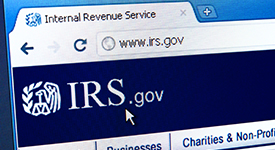
IRS.gov features a large amount of information on tax topics and answers to many questions. The IRS recommends checking out their website for information on tax topics. In many cases, you can find the answer to your tax question on the IRS.gov website and this saves you money and time on hiring a CPA.

The IRS website is a convenient way to have access to a wide range of information on tax topics. The IRS notes that there is a wide range of information available on tax related topics, news on the latest tax legislation, access to tax forms and publications, as well as information on tax deductible charities and more.

There are often announcements on various forms of tax relief and tax rebates that are offered by the IRS. Taxpayers may catch incentives or different types of tax relief that may save them thousands of dollars on their taxes. Education on tax topics is important for almost every taxpayer, and the IRS provide quite a bit of information about tax topics on its site for educational purposes.

The IRS sent out 5 reasons to visit its website in a recent newsletter, although there are certainly many more:

Five Reasons to Visit IRS.gov this Summer

Did you know the IRS is making it easier to get answers to your tax questions? The IRS Web site – IRS.gov makes it easy to get an answer to a tax question, anytime during the year. The site is available 24 hours a day 7 days a week. Whether you need a form or have tax questions, IRS.gov has a wealth of information. IRS.gov is accessible all day, every day.

Here are five reasons to visit IRS.gov this summer.

  • Get the latest information on new tax law changes. Several new laws have been enacted and there are provisons that affect almost every taxpayer.
  • Calculate the right amount of withholding allowances on your W-4. The IRS Withholding Calculator will help you ensure that you don’t have too much or too little income tax withheld from your pay.
  • Search for charities. Search Publication 78, Cumulative List of Organizations, to find out if an organization is exempt from federal taxation and, if so, how much of your contributions to that organization are tax deductible.
  • Get information about careers at the IRS. No matter what your professional specialty, the IRS can offer you a variety of full-time career or seasonal job opportunities.
  • Get tax forms and publications. You can view, download and order tax forms and publications any hour of the day or night.

Remember that for the genuine IRS Web site be sure to use .gov. Don’t be confused by internet sites that end in .com, .net, .org or other designations instead of .gov. The address of the official IRS governmental Web site is www.irs.gov.

Tips for Charitable Contribution Deductions

August 30th, 2010 Sully No comments

Charitable contributions are tax deductible, and contributions must be made to qualified organizations in order to count as deductions. Qualified organizations are listed by the IRS and if there is a question on whether or not an organization is qualified, the IRS can be contacted to help you determine that.

There are several rules on charitable donations that determine whether they are deductible or not as well as the amount of the donation that is deductible. For instance, many may not be aware that property donations are deductible based upon the fair market value of the property donated. There are special rules applied to certain items like cars or clothing.

It is also important for you to keep records of everything that you donate, and also have records from the organization in which a donation was made. A recent IRS newsletter goes into more detail about charitable donations and how they should be dealt with:

Ten Tips for Taxpayers Making Charitable Donations

Did you make a donation to a charity this year? If so, you may be able to take a deduction for it on your 2010 tax return. However, with charitable contributions there are several rules that determine whether contributions qualify or not along with the qualified amount. The IRS can help you to determine if your contributions are eligible for deductions.

Here are the top 10 things the IRS wants every taxpayer to know before deducting charitable donations:

1. Charitable contributions must be made to qualified organizations to be deductible. You can ask any organization whether it is a qualified organization and most will be able to tell you. You can also check IRS Publication 78, Cumulative List of Organizations, which lists most qualified organizations. IRS Publication 78 is available at IRS.gov.
2. Charitable contributions are deductible only if you itemize deductions using Form 1040, Schedule A.
3. You generally can deduct your cash contributions and the fair market value of most property you donate to a qualified organization. Special rules apply to several types of donated property, including clothing or household items, cars and boats.
4. If your contribution entitles you to receive merchandise, goods, or services in return – such as admission to a charity banquet or sporting event – you can deduct only the amount that exceeds the fair market value of the benefit received.
5. Be sure to keep good records of any contribution you make, regardless of the amount. For any contribution made in cash, you must maintain a record of the contribution such as a bank record – including a canceled check or a bank or credit card statement – a written record from the charity containing the date and amount of the contribution and the name of the organization, or a payroll deduction record.
6. Only contributions actually made during the tax year are deductible. For example, if you pledged $500 in September but paid the charity only $200 by Dec. 31, your deduction would be $200.
7. Include credit card charges and payments by check in the year they are given to the charity, even though you may not pay the credit card bill or have your bank account debited until the next year.
8. For any contribution of $250 or more, you must have written acknowledgment from the organization to substantiate your donation. This written proof must include the amount of cash and a description and good faith estimate of value of any property you contributed, and whether the organization provided any goods or services in exchange for the gift.
9. To deduct charitable contributions of items valued at $500 or more you must complete a Form 8283, Noncash Charitable Contributions, and attached the form to your return.
10. An appraisal generally must be obtained if you claim a deduction for a contribution of noncash property worth more than $5,000. In that case, you must also fill out Section B of Form 8283 and attach the form to your return.

For more information see IRS Publication 526, Charitable Contributions, and for information on determining value, refer to Publication 561, Determining the Value of Donated Property. These publications are available at IRS.gov or by calling 800-TAX-FORM (800-829-3676).

More Info About the American Opportunity Tax Credit

August 29th, 2010 Sully No comments

The American Opportunity Tax Credit is available for Americans to offset the cost of college. The credit can be claimed through December 31, 2010 for expenses paid during the 2009-2010 school year. The American Opportunity Credit is the new name of the Hope Credit. The credited was renamed after changes were made to the maximum amount that could be claimed per calender year among other changes.

The American Opportunity Tax Credit and the Lifetime Learning Credit can not be claimed in the same year for one student. The choice between the two credits should depend on which one is more beneficial for the taxpayer. Taxpayers may be eligible for up to a $2,500 tax credit depending on the amount they spend for qualified educational expenses. Up to 40 percent of the credit is refundable, and the IRS details more information about the credit in a recent newsletter with six facts about the credit:

Six Facts about the American Opportunity Tax Credit

There is still time left to take advantage of the American Opportunity Tax Credit, a credit that will help many parents and college students offset the cost of college. This tax credit is part of the American Recovery and Reinvestment Act of 2009 and is available through December 31, 2010. It can be claimed by eligible taxpayers for college expenses paid in 2009 and 2010.

Here are six important facts the IRS wants you to know about the American Opportunity Tax Credit:

This credit, which expands and renames the existing Hope Credit, can be claimed for qualified tuition and related expenses that you pay for higher education in 2009 and 2010. Qualified tuition and related expenses include tuition, related fees, books and other required course materials.

The credit is equal to 100 percent of the first $2,000 spent per student each year and 25 percent of the next $2,000. Therefore, the full $2,500 credit may be available to a taxpayer who pays $4,000 or more in qualifying expenses for an eligible student.

The full credit is generally available to eligible taxpayers who make less than $80,000 or $160,000 for married couples filing a joint return. The credit is gradually reduced, however, for taxpayers with incomes above these levels.

Forty percent of the credit is refundable, so even those who owe no tax can get up to $1,000 of the credit for each eligible student as cash back.

The credit can be claimed for qualified expenses paid for any of the first four years of post-secondary education.

You cannot claim the tuition and fees tax deduction in the same year that you claim the American Opportunity Tax Credit or the Lifetime Learning Credit. You must choose to either take the credit or the deduction and should consider which is more beneficial for you.

Complete details on the American Opportunity Tax Credit and other key tax provisions of the Recovery Act are available at IRS.gov/recovery.

Links:

Tax Benefits for Education: Information Center
Publication 970, Tax Benefits for Education
YouTubeVideo:

Education Credits (Parents): English | Spanish | ASL

Audio File for Podcast:

American Opportunity Tax Credit

Employee vs. Independent Contractor Tips From the IRS

August 26th, 2010 Sully No comments

The IRS offered tips for business owners on hiring employees vs independent contractors. There are certain rules that help business owners classify the types of employees that they hire. These rules affect how business owners pay their taxes and how they handle the paperwork for their employees. Sometimes business owners incorrectly classify workers which can result in large tax bills. It is important for business owners to know the defining characteristics of employees versus independent contractors so that their taxes accurately reflect this difference.

In a recent IRS newsletter, the IRS offered some tips for business owners on how to classify their workers. If there is still any doubt, business owners can contact the IRS directly for information on their specific situation. The IRS uses three characteristics to define the difference between the two types of workers which are further explained below:

Employee vs. Independent Contractor – Seven Tips for Business Owners

As a small business owner you may hire people as independent contractors or as employees. There are rules that will help you determine how to classify the people you hire. This will affect how much you pay in taxes, whether you need to withhold from your workers paychecks and what tax documents you need to file.

Here are seven things every business owner should know about hiring people as independent contractors versus hiring them as employees.

1. The IRS uses three characteristics to determine the relationship between businesses and workers:

* Behavioral Control covers facts that show whether the business has a right to direct or control how the work is done through instructions, training or other means.
* Financial Control covers facts that show whether the business has a right to direct or control the financial and business aspects of the worker’s job.
* Type of Relationship factor relates to how the workers and the business owner perceive their relationship.

2. If you have the right to control or direct not only what is to be done, but also how it is to be done, then your workers are most likely employees.

3. If you can direct or control only the result of the work done — and not the means and methods of accomplishing the result — then your workers are probably independent contractors.

4. Employers who misclassify workers as independent contractors can end up with substantial tax bills. Additionally, they can face penalties for failing to pay employment taxes and for failing to file required tax forms.

5. Workers can avoid higher tax bills and lost benefits if they know their proper status.

6. Both employers and workers can ask the IRS to make a determination on whether a specific individual is an independent contractor or an employee by filing a Form SS-8, Determination of Worker Status for Purposes of Federal Employment Taxes and Income Tax Withholding, with the IRS.

7. You can learn more about the critical determination of a worker’s status as an Independent Contractor or Employee at IRS.gov by selecting the Small Business link. Additional resources include IRS Publication 15-A, Employer’s Supplemental Tax Guide, Publication 1779, Independent Contractor or Employee, and Publication 1976, Do You Qualify for Relief under Section 530? These publications and Form SS-8 are available on the IRS website or by calling the IRS at 800-829-3676 (800-TAX-FORM).

What to Do If You Receive an IRS Notice

August 26th, 2010 Sully No comments

The IRS gave out some information and tips on what to do if you receive an IRS notice in their latest newsletter. The IRS sends out notices and letters every year and many of the notices can be dealt with fairly easily. The IRS affirms that many of the notices are for simple reasons like an information request.

The IRS also says that the letters offer specific instructions on how to deal with the notice. The IRS says to not worry or panic if you receive the notice, but to simply respond to the instructions listed in the notice. In some cases, no reply is necessary unless a payment is due. If there is a disagreement with a correction, it must be dealt with as quickly as possible through the method that the IRS lists.

Here is some more information from the IRS on how to respond to notices:

Eight Things to Know If You Receive an IRS Notice

Did you receive a notice from the IRS this year? Every year the IRS sends millions of letters and notices to taxpayers but that doesn’t mean you need to worry. Here are eight things every taxpayer should know about IRS notices – just in case one shows up in your mailbox.

1. Don’t panic. Many of these letters can be dealt with simply and painlessly.
2. There are number of reasons the IRS sends notices to taxpayers. The notice may request payment of taxes, notify you of a change to your account or request additional information. The notice you receive normally covers a very specific issue about your account or tax return.
3. Each letter and notice offers specific instructions on what you need to do to satisfy the inquiry.
4. If you receive a correction notice, you should review the correspondence and compare it with the information on your return.
5. If you agree with the correction to your account, usually no reply is necessary unless a payment is due.
6. If you do not agree with the correction the IRS made, it is important that you respond as requested. Write to explain why you disagree. Include any documents and information you wish the IRS to consider, along with the bottom tear-off portion of the notice. Mail the information to the IRS address shown in the upper left-hand corner of the notice. Allow at least 30 days for a response.
7. Most correspondence can be handled without calling or visiting an IRS office. However, if you have questions, call the telephone number in the upper right-hand corner of the notice. Have a copy of your tax return and the correspondence available when you call, to help us respond to your inquiry.
8. It’s important that you keep copies of any correspondence with your records.

For more information about IRS notices and bills, see Publication 594, The IRS Collection Process. Information about penalties and interest charges is available in Publication 17, Your Federal Income Tax for Individuals. Both publications are available at IRS.gov or by calling 800-TAX-FORM (800-829-3676).

Why You Should Visit an IRS Taxpayer Assistance Center

July 30th, 2010 Sully No comments

Visiting an IRS Taxpayer Assistance Center is a good idea for several reasons. There are issues that sometimes cannot be dealt with through phone support or through the internet. The purpose of IRS Taxpayer Assistance Centers are to offer a walk-in option for issues like notices, walk-in payments, free Federal tax return preparation, and many other issues.

In other cases, it is just sometimes more preferable to deal face-to-face with a person when discussing confidential tax information. It makes sense to visit an IRS Taxpayer Assistance Center in many cases, and in one of the latest IRS newsletters there are more details on the types of circumstances that may warrant a visit to an IRS center.

Eight Reasons to Visit an IRS Taxpayer Assistance Center

Do you need assistance with a tax issue that can’t be handled online or on the phone? If you want to meet with an IRS representative face-to-face, come to your local IRS Taxpayer Assistance Center. Here are eight reasons to visit an IRS TAC.

1. Notices or letters Have you received a letter or notice and need face-to-face assistance to understand the next step? No appointment is necessary — just walk in.
2. Multilingual Assistance Don’t let a language barrier prevent you from getting the face-to-face tax assistance you may need. Multilingual services are offered to taxpayers in over 150 languages. These services are provided through bilingual employees and an Over-the-Phone Interpreter.
3. Payments You can make payments at your local IRS TAC. Be sure you know the tax period and the type of tax for the payment you are making. If you received a notice from the IRS, be sure to bring it with you.
4. Free Federal Tax Return Preparation Your local TAC will prepare both current and prior year basic tax returns for those who qualify for Earned Income Tax Credit or those whose income is less than $49,000.
5. Form 2290, Heavy Highway Vehicle Use Tax Return Your local TAC can help you prepare Form 2290, accept your payment and provide the needed receipts for you to take when registering your vehicle.
6. Individual Taxpayer Identification Number If you are not eligible for a Social Security Number but need to file a tax return, bring the completed tax return, Form W-7, Application for IRS Individual Identification Number and certified identification documents to your local TAC to apply for your ITIN and file your return. For more information, see Publication 519, U.S. Tax Guide for Aliens.
7. Alien Clearances Before leaving the United States, most aliens must obtain a certificate of tax compliance. This document, also popularly known as the sailing permit or departure permit, must be secured from the IRS before leaving the U.S. You can get the permit from your local TAC. For more information, see Publication 513, Tax Information for Visitors to the United States.
8. Tax Return and Tax Account Transcripts Do you need a copy of your tax return for financial aid or to obtain a mortgage? If so, a tax return or tax account transcript will generally meet the requirements of these lending institutions. Visit your local TAC for free transcripts, which are generally available for the current and past three years.

TAC locations, business hours and an overview of services are available at IRS.gov. Just go to the “Individuals” tab and click on the link for Contact My Local Office in the left tool bar section under IRS Resources.

About Identity Theft

July 30th, 2010 Sully No comments

The IRS released a newsletter that discussed what taxpayers should know about identity theft. Taxpayers should be careful to protect their personal information so that identity theft cannot happen. Although, sometimes identity theft happens no matter how much you prepare. If you become a victim of identity theft, you are generally not held liable for any expenses occurred.

With so many different types of online fraud and scams to steal personal information, it is important for you to be aware of what types of identity theft schemes are common online. Here is the full newsletter for more information from the IRS on what all taxpayers should know about identity theft:

Top 10 Things Every Taxpayer Should Know about Identity Theft

Taxpayers need to be careful to protect their personal information. Identity thieves use many methods to steal personal information and then they use the information to file a tax return and get a refund. Here are 10 things the IRS wants you to know about identity theft so you can avoid becoming the victim of an identity thief.

1. The IRS does not initiate contact with a taxpayer by e-mail.

2. If you receive a scam e-mail claiming to be from the IRS, forward it to the IRS at phishing@irs.gov.

3. Identity thieves get your personal information by many different means, including:

* Stealing your wallet or purse
* Posing as someone who needs information about you through a phone call or e-mail
* Looking through your trash for personal information
* Accessing information you provide to an unsecured Internet site.

4. If you discover a website that claims to be the IRS but does not begin with ‘www.irs.gov’, forward that link to the IRS at phishing@irs.gov.

5. To learn how to identify a secure website, visit the Federal Trade Commission at www.onguardonline.gov/tools/recognize-secure-site-using-ssl.aspx

6. If your Social Security number is stolen, another individual may use it to get a job. That person’s employer may report income earned by them to the IRS using your Social Security number, thus making it appear that you did not report all of your income on your tax return.

7. Your identity may have been stolen if a letter from the IRS indicates more than one tax return was filed for you or the letter states you received wages from an employer you don’t know. If you receive such a letter from the IRS, leading you to believe your identity has been stolen, respond immediately to the name, address or phone number on the IRS notice.

8. If your tax records are not currently affected by identity theft, but you believe you may be at risk due to a lost wallet, questionable credit card activity, or credit report, you need to provide the IRS with proof of your identity. You should submit a copy of your valid government-issued identification – such as a Social Security card, driver’s license, or passport – along with a copy of a police report and/or a completed Form 14039, Identity Theft Affidavit. As an option, you can also contact the IRS Identity Protection Specialized Unit, toll-free at 800-908-4490. You should also follow FTC guidance for reporting identity theft at www.ftc.gov/idtheft.

9. Show your Social Security card to your employer when you start a job or to your financial institution for tax reporting purposes. Do not routinely carry your card or other documents that display your Social Security number.

10. For more information about identity theft – including information about how to report identity theft, phishing and related fraudulent activity – visit the IRS Identity Theft and Your Tax Records Page, which you can find by searching “Identity Theft” on the IRS.gov home page.

Categories: IRS Newsletter Tip Tags:

Tips for Taxpayers Making a Move

April 24th, 2010 Erich J. Ruth No comments

If you changed your home or business address, you’ll want to remember these six tips to ensure you receive any refunds or correspondence from the IRS.

1. You can change your address on file with the IRS in several ways:

  • Correct the address legibly on the mailing label that comes with you tax package
  • Write the new address in the appropriate boxes on your tax return;
  • Use Form 8822, Change of Address, to submit an address or name change any time during the year
  • Give the IRS written notification of your new address by writing to the IRS center where you file your return. Include your full name, old and new addresses, Social Security Number or Employer Identification Number and signature. If you filed a joint return, be sure to include the information for both taxpayers. If you filed a joint return and have since established separate residences, both taxpayers should notify the IRS of your new addresses
  • Should an IRS employee contact you about your account, you may be able to verbally provide a change of address

2. Be sure to also notify your employer of your new address so you get your W-2 forms on time.

3. If you change your address after you’ve filed your return, don’t forget to notify the post office at your old address so your mail can be forwarded.

4. Taxpayers who make estimated payments throughout the year should mail a completed Form 8822, Change of Address, or write the IRS center where you file your return. You may continue to use your old pre-printed payment vouchers until the IRS sends you new ones with your new address. However, do not correct the address on the old voucher.

5. The IRS does use the Postal Service’s change of address files to update taxpayer addresses, but it’s still a good idea to notify the IRS directly.

6. Visit IRS.gov for more information about changing your address. You can find the address of the IRS center where you file your tax return or download Form 8822, Change of Address. The form is also available by calling 800-TAX-FORM (800-829-3676).

Links: 

  • Form 8822, Change of Address (PDF 60K)

Tax Topic 157, Change of Address — How to Notify IRS

Categories: IRS Newsletter Tip Tags:

Tips for Recently Married or Divorced Taxpayers

April 24th, 2010 Erich J. Ruth No comments

If you were married or divorced recently, there are a couple of things you’ll want to do to ensure the name on your tax return matches the name registered with the Social Security Administration.

If a taxpayer takes their spouse’s last name or if both spouses hyphenate their last names, they may run into complications if they don’t notify the SSA. If the newlyweds file a tax return using their new last names, IRS computers would not be able to match the new name with their Social Security Number.

After a divorce, taxpayers who change back to their previous last name also need to notify the SSA of the change.

Informing the SSA of a name change is quite simple. File a Form SS-5 at your local SSA office. The form is available on SSA’s Web site at www.socialsecurity.gov, by calling 800-772-1213 or at local offices. It usually takes about two weeks to have the change verified.

Taxpayers who adopt their spouse’s child after getting married will want to make sure the children have an SSN. Taxpayers must provide SSNs for each dependent claimed on a tax return. For adopted children without SSNs, the parents can apply for an Adoption Taxpayer Identification Number – or ATIN – by filing Form W-7A, Application for Taxpayer Identification Number for Pending U.S. Adoptions with the IRS. The ATIN is a temporary number used in place of an SSN on the tax return. The W-7A is available on the IRS Web site, IRS.gov, or by calling 800-TAX-FORM (800-829-3676).

Categories: IRS Newsletter Tip Tags: